
Grabbed First? What Actually Works Under Pressure | Leander & Austin Self-Defense Guide
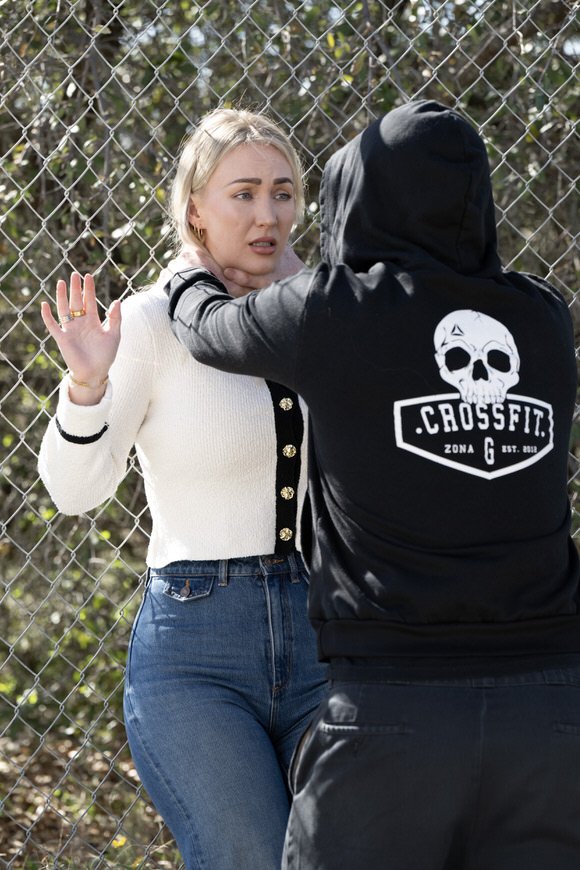
Most people picture a fight starting with punches.
That’s not how it usually goes.
Most real-world situations start with a grab.
Someone grabs your wrist. Your shirt. Your arm. Sometimes both arms. Sometimes from behind. Sometimes when you’re not even looking.
And this is where most people freeze.
Not because they’re weak.
Because they’ve never dealt with that kind of pressure before.
What a Grab Really Means in Real-World Self-Defense
A grab isn’t just contact.
It’s control.
The moment someone locks their hands onto you—even for a second—they’re dictating what happens next.
They can:
Pull you off balance
Close distance
Strike while you’re stuck reacting
And most people don’t recognize that shift fast enough.
They still think they’re in a “fight.”
They’re not.
They’re already behind.
When Grabs Actually Happen
This isn’t theory. These are common real-world situations:
Parking lots—someone grabs your arm while demanding something
Bars—someone grabs your shirt during an argument
Walking to your car—someone grabs from behind
Escalating conversations—someone grabs your wrist to stop you
These situations happen fast.
And they all start the same way:
Someone takes control before you’re ready.
The First Mistake Most People Make
When people get grabbed, they try to fight the person.
They swing. They push. They try to overpower.
That’s the wrong focus.
You don’t fight the person first.
You deal with the grip.
If you don’t break that control, nothing else works the way you think it will.
Your strikes won’t land clean
Your movement gets restricted
Your balance is compromised
You’re reacting instead of acting.
Why People Freeze During a Real Grab
There’s a difference between being touched and being grabbed with intent.
When someone grabs you aggressively:
The pressure is higher than expected
The distance is closer than you’re used to
Everything feels faster and more intense
Most people have never trained under that kind of pressure.
Their experience is cooperative. Controlled. Predictable.
This is different.
That’s why they freeze.
Fight the Grip First
A grab is control.
If someone controls you, they decide what happens next.
So your first job is simple:
Break the grip.
Not with strength.
With positioning, leverage, and timing.
You’re not trying to win a tug-of-war.
You’re trying to remove the connection.
That means:
Turning into weak points in the grip
Using your body, not just your arms
Moving with purpose, not panic
Small, direct movements—not big, complicated ones.
The simpler it is, the more it works under pressure.
Common Types of Grabs in Real Situations
Most people only think of one type of grab.
In reality, you’ll see:
Wrist grabs (single or double)
Shirt or collar grabs
Bear hugs (front or behind)
Arm control (upper arm or two-on-one)
Each feels different.
But the principle stays the same:
Break control first.
Trying to memorize techniques for every situation doesn’t work under pressure.
Understanding the principle does.
What Happens to Your Body Under Pressure
When someone grabs you for real, your body changes:
Heart rate spikes
Fine motor skills drop
Vision narrows
Reaction time slows
This is normal.
But most self-defense training ignores it.
They teach techniques that require precision, timing, and calm thinking.
That’s not realistic.
Real self-defense has to work when you’re stressed, surprised, and under pressure.
Create Space Immediately
Breaking the grip is step one.
It’s not the finish.
This is where people make another mistake.
They break free—and then they hesitate.
That hesitation gives the other person another chance.
Once the grip breaks:
Create space
Move your feet
Reset your position
Space gives you options.
No space means you’re still in danger.
Why Distance Matters After the Escape
If someone grabbed you, they’re already close enough to strike.
If you break the grip but stay in place, you’re still in range.
Distance gives you:
Time to react
Room to move
A chance to exit
Without distance, you’re just waiting for the next attack.
Why Simple Techniques Work Best Under Pressure
Under stress, everything changes:
Your timing gets worse
Your coordination drops
Complex movements break down
That’s why we keep things simple:
Clear the grip
Protect your position
Move out
No extra steps.
No complicated sequences.
Simple works.
What About Strength?
A lot of people think they need to be stronger.
They don’t.
If your plan is strength versus strength, you’ll lose against someone bigger or more aggressive.
Structure and leverage beat strength.
Every time.
When your body is aligned correctly and you move with intent, you don’t need to overpower anything.
You just need to remove control.
Why Most Training Fails Here
Most people have never trained this under real pressure.
They’ve:
Seen techniques
Practiced lightly
Drilled with cooperative partners
But when someone grabs them with real intent—tight, aggressive, unpredictable—everything changes.
That’s where things fall apart.
Because the training didn’t match reality.
How We Train It Differently at Texas Combat
We don’t treat this as a static technique.
We treat it as a problem under pressure.
That means:
Non-cooperative partners
Progressive resistance
Realistic timing
Controlled but unpredictable scenarios
You learn what actually works.
Not what looks good in practice.
What Happens After You Break Free
Breaking the grip isn’t the end.
It’s usually the beginning.
The other person may:
Try to grab again
Escalate to strikes
Follow your movement
Increase aggression
That’s why we train the full sequence:
Escape
Create space
Stay aware
Exit safely
Self-Defense Training in Leander and Austin, Texas
If you’re in the Leander or greater Austin area, this is exactly what we train at Texas Combat.
Most self-defense programs focus on techniques after contact. We focus on what happens before and during control—breaking grips, creating space, and staying functional under pressure.
Our training is built for real-world situations:
Parking lots
Public environments
Close-contact encounters
High-stress situations
We don’t train for sport.
We train for reality.
If you’re looking for practical self-defense in Leander or Austin, come see how we train.
The Bottom Line
Most real situations don’t start with punches.
They start with control.
If you can’t break that control, nothing else matters.
Break the grip.
Create space.
Get out.
That’s the priority.
If you want to train this in a way that actually works under pressure—not just drills—come see how we do it at Texas Combat.